
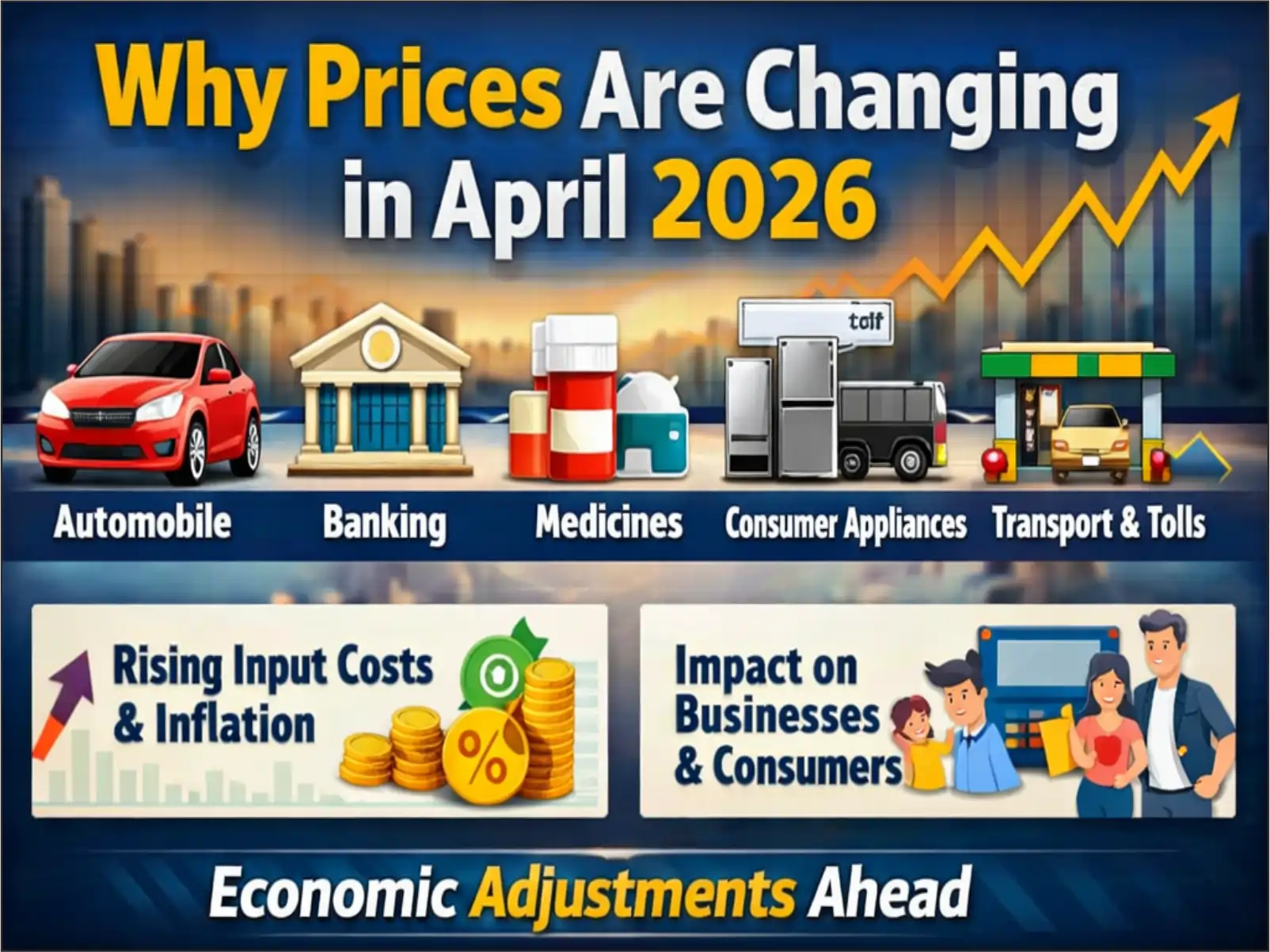
With the beginning of the new financial year on April 1, 2026, India is witnessing several price changes across key sectors. These updates affect consumers, businesses, and freelancers alike.
From banking charges and automobile costs to appliances and services, this financial reset reflects inflation trends, policy updates, and global economic factors.
Why Prices Are Changing in April 2026
Price revisions are driven by multiple factors including inflation adjustments, rising input costs, global supply chain pressures, and government policy changes.
These changes are part of the annual financial restructuring that impacts the overall economy and aligns pricing with current market conditions.
Sector-Wise Price Changes
1. Automobile Sector
Automobile companies have increased vehicle prices due to rising raw material costs, higher logistics expenses, and increased compliance requirements.
- Price increase of around 0.5% – 2%
- Higher cost of steel, aluminum, and components
- Impact on both cars and two-wheelers
2. Banking & Financial Services
Banks have revised their service charges as part of the new financial year updates.
- ATM withdrawal charges increased after free limit
- Maintenance and service fees revised
- Locker rental charges increased
3. Medicines
Essential medicines have seen a minor price increase based on inflation-linked adjustments.
- Increase of around 0.5% – 1%
- Affects commonly used drugs like painkillers and antibiotics
4. Consumer Appliances
Prices of appliances such as air conditioners and electronics have increased due to import and production costs.
- Price hike of 7% – 12%
- Higher demand during summer season
5. Transport & Toll Charges
Transportation costs have slightly increased, affecting both individuals and businesses.
- FASTag and toll charges revised
- Impact on logistics and daily commuters
Market Insight
Even small increases in transportation and service costs can indirectly raise prices of everyday goods due to higher logistics expenses.
Impact on Small Businesses
Small businesses are the most affected due to limited financial flexibility and rising operational costs.
- Increased cost of raw materials and transportation
- Higher banking and service charges
- Reduced profit margins
Many small businesses may slightly increase product or service prices to maintain sustainability.
Impact on Medium Businesses
Medium-sized businesses experience moderate pressure but have better capacity to manage costs.
- Higher employee and operational expenses
- Ability to optimize processes and reduce costs
- Strategic pricing adjustments
Impact on Large Businesses
Large-scale businesses face higher costs but can adapt through scale and strategy.
- Increased supply chain and infrastructure costs
- Adoption of automation and cost optimization
- Strong financial reserves to absorb short-term impact
Impact on Freelancers
Freelancers experience a mixed impact due to rising service costs but stable digital infrastructure.
- Higher cost of software tools and subscriptions
- Internet and operational expenses increased
- UPI payments remain free for individuals
Many freelancers may revise pricing or expand to international clients to offset rising costs.
Overall Economic Impact
The overall economic impact of April 2026 price changes is moderate but widespread across sectors.
- Consumers face gradual increase in daily expenses
- Businesses adjust pricing and operations
- Digital services help maintain affordability
Future Outlook
Looking ahead, inflation is expected to remain controlled but present. Businesses will focus on efficiency, while consumers may adjust spending habits.
Digital payments, automation, and technology adoption will play a key role in balancing future costs.
Conclusion
The April 2026 price changes represent a structured financial adjustment rather than a sudden economic shock.
While certain sectors are becoming costlier, stability in digital services and controlled inflation ensures that the overall impact remains manageable.
Frequently Asked Questions
Will all prices increase from April 2026?
No, only selected sectors see price hikes while some remain stable or unchanged.
Which sector is most affected?
Small businesses and banking services experience the most noticeable impact.
Are digital payments affected?
No, UPI payments remain free for regular users.
Will prices continue to rise?
Prices may gradually increase depending on inflation and global economic conditions.
How can consumers manage these changes?
By planning expenses, reducing unnecessary spending, and adapting to digital financial tools.