
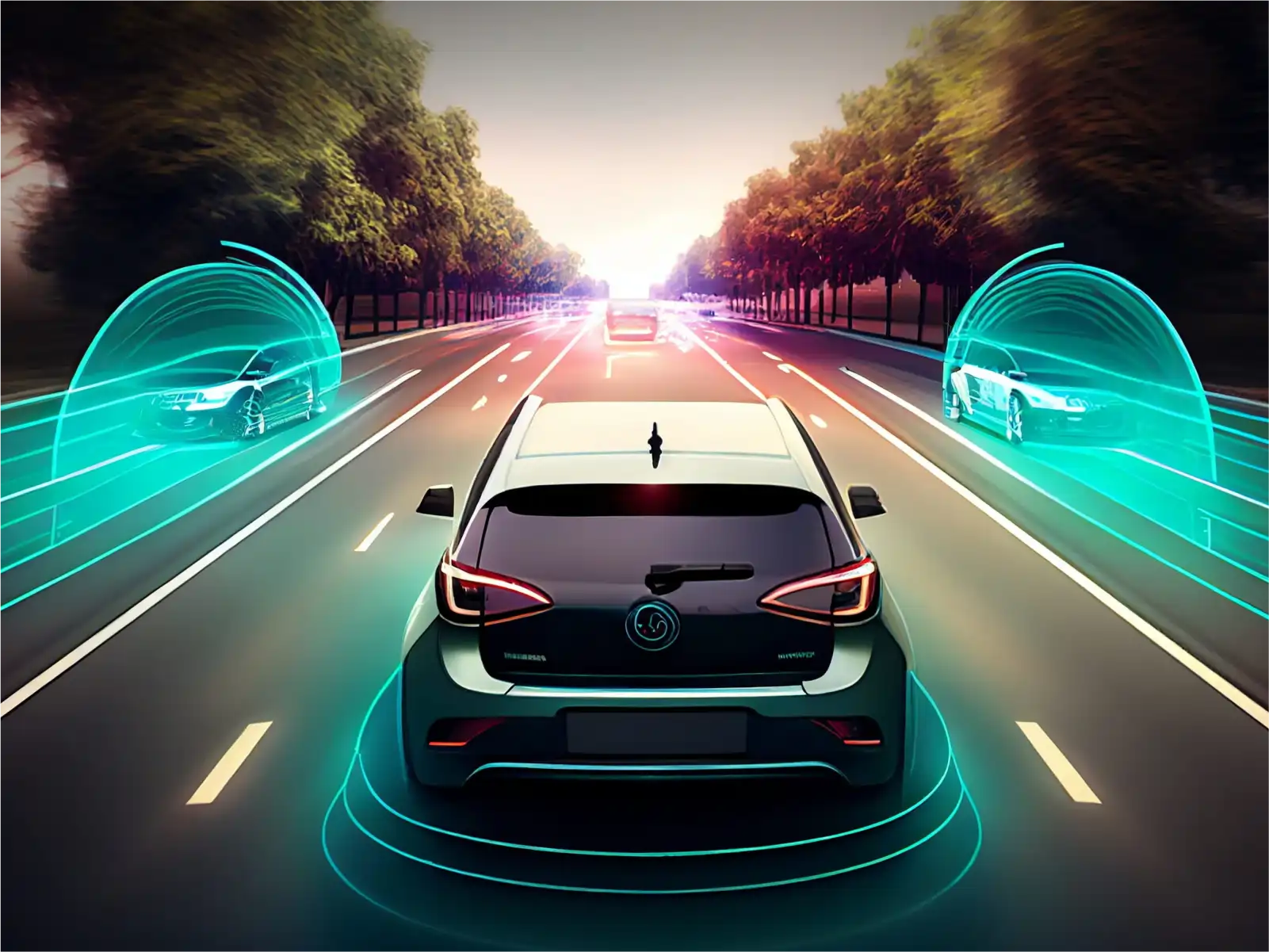
The automotive world is witnessing one of its biggest revolutions: the rise of autonomous vehicles. These self-driving machines are reshaping mobility and redefining road safety.
Powered by Artificial Intelligence (AI), advanced sensor networks, and embedded computing, smart cars are designed to reduce human error — the leading cause of road accidents.
The Safety Promise of Autonomous Vehicles
Autonomous vehicles rely on continuous data analysis instead of human reflexes. They detect hazards earlier, interpret traffic behavior, and respond instantly.
Through reliable embedded system design, vehicles remain safe even in unpredictable conditions, moving us closer to accident-free roads.
Understanding How Autonomous Safety Systems Work
Autonomous safety depends on three fundamental layers: perception, decision-making, and control.
1. Perception
- Cameras, radar, lidar, and ultrasonic sensors monitor surroundings
- Objects and lane markings are detected in real time
- AI predicts movement and collision risks
2. Decision-Making
- AI models process sensor data in milliseconds
- Embedded processors ensure deterministic behavior
- Safe actions are chosen instantly
3. Control
- Electronic control units manage braking and steering
- Commands execute within microseconds
- Fail-safe embedded systems guarantee reliability
Why Embedded Systems Are the Backbone of Vehicle Safety
Autonomous safety begins with hardware. Sensors, ECUs, and processors must operate flawlessly under heat, vibration, and electrical noise.
Embedded system design ensures low latency, redundancy, and compliance with automotive safety standards like ISO 26262 and AUTOSAR.
Key Insight
Embedded systems provide the real-time intelligence required for autonomous safety.
Layers of Safety in Autonomous Cars
Redundant Systems
Duplicate sensors and processors ensure continued operation during failures.
AI Validation
AI models are trained on millions of real and simulated driving scenarios.
Cybersecurity
Secure boot, encrypted communication, and intrusion detection protect vehicle systems.
Hardware-in-the-Loop Testing
Embedded safety systems are validated using real-time simulations before deployment.
Challenges and the Road Ahead
- Complex road environments
- Ethical decision-making
- Regional regulatory differences
Automakers partner with embedded system companies to overcome these challenges and build public trust.
The Future of Safe Autonomous Mobility
The future of road safety lies in the fusion of AI intelligence and hardware precision. Vehicles will evolve into adaptive, predictive systems.
Embedded technology will continue to drive safer, smarter, and more reliable mobility.
Frequently Asked Questions
How do autonomous vehicles improve safety?
By reducing human error using AI-driven perception and instant response.
Why are embedded systems critical?
They enable real-time control, fault detection, and fail-safe execution.
What role do embedded system companies play?
They design, validate, and certify automotive safety architectures.